For the last several months (or longer), after a round of Uceris to tamp down some smoldering inflammation, I’ve ventured more into “whole foods plant based” diet territory, in an effort to forestall the need for more steroids or Humira or similar. I’m now in remission and for the last several months I’ve been eating beans (usually navy beans in soup, or mixed in with brown rice pasta) several days a week for the last six months. I began testing out beans – at first with trepidation – after reading the study I posted on this blog earlier (about navy beans and white kidney beans in particular). I had good results with them so I kept eating them.
In the past, after a flare, I’d eat in fear – fearful that the “wrong” thing could kick of an inflammatory spiral. Now, while I certainly have my avoid list (featured at least partially on this blog), in general, by eating a 80-90% whole foods plant based diet (no processed foods), no alcohol and no sugar, so far I’m remaining solidly in remission (while continuing with my maintenance meds).
As I’ve been typing this, I’ve been eating pumpkin seeds in the shell…
The exceptions to the “plant based” approach are fish (cod or salmon for lunch 2-3 x’s a week), kefir, and a small amount of low fat cheese (a few times a week).
This is something that comes up repeatedly in a variety of studies and anecdotal reports from fellow Colitis patients (many of which are featured on this blog):
“Fiber-rich foods act as fuel for the “good” bacteria that live in the gut and produce short-chain fatty acids, which are critical for an efficient immune response.
Eating high-sugar diets and decreasing intake of fiber feeds “bad” microbes, such as E. coli, that are associated with inflammation and a defective immune response.
Madsen’s study showed that the mice on the high-sugar diet had greater intestinal tissue damage and a defective immune response. These problems were alleviated when their diet was supplemented with short-chain fatty acids normally produced by good bacteria.”
In past blog post, I mentioned that years ago, when I was diagnosed, I asked the gastro. at the time if I could keep drinking coffee. He was dismissive and said something to that effect that, “It doesn’t matter what you eat.” Back then and even now, the belief was, “Food doesn’t cause Colitis.” Meanwhile though, there are numerous studies, especially in the last few years, showing how diet and the health of one’s microbiome has a cause & effect relationship with digestive diseases. A new study (in mice) shows, for example, that eating fried food basically demolishes your gut and worsens UC (what a surprise…): https://www.sciencedaily.com/releases/2019/08/190823094825.htm
And interestingly, a number of Colitis patients have self-treated through strict dietary intervention(Kenny Honnas – What I ate to Heal): https://www.youtube.com/watch?v=7Lo2I1gUYfg
And lastly (for this blog post), there’s a link between a high sugar diet and Colitis induction – A high-sugar diet rapidly enhances susceptibility to colitis via depletion of luminal short-chain fatty acids in mice: https://www.nature.com/articles/s41598-019-48749-2
This might be a Rosetta Stone: rapidly enhances susceptibility to colitis via depletion of luminal short-chain fatty acids
Looking back at the period of my life preceding my diagnosis. I was in grad. school and had a fairly high-stress lifestyle. For the most part, I thought I had a healthy diet but there are products I consumed back then that I would not now (for instance, Almond Milk, which contains Carrageenan, and is featured on the “avoid” list on this blog).
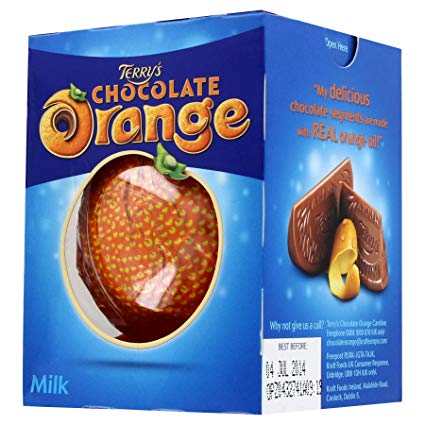
Something I recall eating back then (idiotically), was something called a chocolate orange. It’s a baseball sized sphere of chocolate and it breaks apart into slices that a sensible person would eat sparingly (e.g. one slice once in a while). But not me…I ate the whole thing at once. And soon after, there was blood in my stool, so to speak. Did the chocolate orange cause my colitis? Was it that plus genetic susceptibility plus other dietary and/or lifestyle factors? In my opinion the chocolate orange was, at a minimum, not a good idea and based on some of the science I posted above MAY have played a role. Also on the ingredient list of the chocolate orange is “milkfat” something contained in other candies and also linked to fueling “bad” gut bacteria. Subsequently, chocolate products have induced flares for me, in particular the ones containing “milkfat.” Obviously I never eat chocolate anymore and avoid added sugar in general (which is pro-inflammatory anyway),
With respect to short-chain fatty acids, what seems to have had really good results for me, is eating foods that cultivate scfa’s and avoiding ones that deplete them. Much info. on this blog covers this ground (what to eat / what to avoid).
So why does much medical literature still say that diet doesn’t cause Colitis or “everyone is different”, eat what you want? Yes, it’s true that we all have particular foods that we can or cannot eat and what leads to IBD is still mysterious and unknown, but it also seems to be complete b.s. to ignore the aggregation of data indicating that optimizing one’s diet can produce significant benefits. Or the numerous studies that keep pointing to benefits of fiber, SCFA’s, and a whole foods plant based diet (or Mediterranean diet). It might be a frustrating and painstaking process, figuring out what works for you over a course of months, or my case, years. But it’s worth it.
What I’ve seen online though, is probably what doctors often face when they suggest to someone with high blood pressure/ cholesterol/ type 2 diabetes, etc. that they adhere to a diet proven to reverse disease… Most people want a painless quick fix… they want to keep downing the onion rings and cheese burgers and beer (or whatever), AND be perfectly healthy or symptom free. I see comments online from some fellow IBD’ers that are similar.
So, can your dietary choices lead to colitis? I don’t know if it’s the “one thing,” but it certainly can degrade or cultivate a healthy microbiome, something that supports a good digestive health whether you have IBD or not. For me, I believe that eating the chocolate orange played a role. Then again, maybe I would’ve gotten Colitis anyway sooner or later. Who knows…
In any case, plenty of research shows that yes, a poor diet can increase your odds of getting UC, and a “good” one can minimize them (as well as yield improvements – or not – for people who already have it). Whether or not you want to accept this is up to you.
This year, always seeking to optimize my diet, I am prob. 80% plant based, at least. The rest is Mediterranean diet (fish and some yogurt) and I’ve been enjoying the longest period of remission I’ve had in ten years.
As I’ve said, I’m not a doctor. I’m someone who has had Colitis for over two decades and have basically been running experiments on myself for that time – an articulate guinea pig…
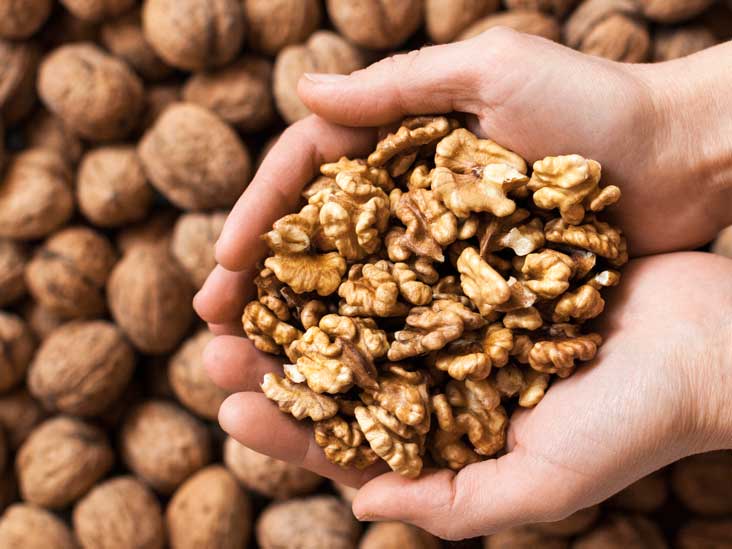
This post is somewhat rambling, prompted after coming across a study (link below) about Walnuts perhaps being preventative for Colitis.
For years, nuts (mainly almonds) were something I’d eat with a caution and obviously not while in a flare. Perhaps I’ll delve into this in another post but somewhere along the line I came to understand that, anecdotally at least, patients with Colitis were having good results with sunflower seeds and cooked spinach. In any case, at some point many years ago, I began eating Sunflower Seed Butter (unsweetened and w/o added sodium), and stuck to nut butters over nuts.
Now, after a short course of Uceris in June to tackle some mild yet smoldering inflammation, I’ve optimized my diet (again), and as I’ve been feeling good have been experimenting with foods such as nuts. Knowing how beneficial walnuts are supposed to be, I’ve been eating a small amount now, daily, for months. I’ve also added other varieties like macadamias. So far, no issues at all.
I think a lot of IBD’ers live in fear that some food item could send them into a flare. And who can blames us? A lot of foods or questionable ingredients (many of which I’ve covered on this blog and will cover in the future) can wreak havoc on our digestive systems and bodies.
That’s why it’s important to have your “avoid” list (which takes time, though trial and error as well as research), and also to be informed about nutritional basics, such as the difference between soluble and insoluble fiber.
Over time though, you can develop a fear-based eating pattern. Eventually you figure out a safe list and discover you’re cycling through the same meals. That is not great for nutrition or health generally, and it’s not good for IBD. Eating diverse foods (e.g. variety of veg., fruits, complex carbs) is what results in a diverse microbiome). So…perhaps in an effort to avoid a flare, you avoid your potential triggers, and stick to a limited “safe” list. In turn, your nutrition suffers and low and behold you slide into a flare…
When not in a flare, I don’t dig into pizzas and fries and greasy food (for example) so I can eat like a “normal” person. I like eating healthy as it is, but for me it’s also important to eat things that will prolong remission (and certainly not put me at risk for another).
Which brings me back to walnuts. Whenever I see a research study like this, I make note of it and if it’s reasonably convenient, I try to incorporate it into my diet. I’ve done that with walnuts and now, as I said, I eat them daily. My point is that, for a long time, I avoided nuts in their whole form, thinking they’d be a problem. At this point, more or less in remission, they aren’t.
Am I saying you should eat walnuts? No. What I’m saying is, just as you exercise caution with what you consume, you should also be careful about backing yourself into a corner food-wise where you end up avoid/cutting items that could be helping you.
Back when I was diagnosed a couple of decades ago, I asked my gastro. at the time if I should keep drinking coffee. He was dismissive and said diet has nothing to do with it. I’m not 100% sure if this was the medical establishment view back then but I think it was, I think only in the last few years has this begun to change (with burgeoning research and focus on the microbiome). Back then, it seems UC / IBD was viewed mostly as an autoimmune issue of “unknown etiology” and without a cure. I was a young adult when I was diagnosed and at the time, the regimen was Mesalamine and Immunomodulators like 6MP were coming into play, besides rectal meds and the dreaded course of steroids, namely Prednisone. Biologics weren’t around then.
Since these meds, while helpful, left a lot to be desired for me (before taking 6MP, I recall always having an emergency dose of Immodium in my pocket), I began searching for info., what little there was back then, on the nascent internet. That early research ended up being ongoing (culminating in this blog). Anyway, as far as a plant based diet, I recall coming across the site of this guy who claimed to be a former stressed out stock broker who abandoned that lifestyle in favor of moving to Florida and adopting a raw plant based diet, which he said helped. As I said, I was a young adult, preparing to embark on my career, ambitious and excited about my prospective path, so the idea of pulling the plug, taking an extended vacation if not dropping off the grid entirely, and adopting a raw vegan diet didn’t seem appealing or feasible. And frankly, while I sympathize, at the time, the guy seemed like a bit of an eccentric.
Someone else I came across, or rather his book – David Klein – Self Healing – Colitis and Crohns. I didn’t read it back then as it also seemed extreme to me, and also kind of “quacky” or “snake oily”. I was, and still am, wary of anyone who tells you there’s a way you can cure your incurable, chronic illness and surprise…charges $ for it. I’ve since looked over Klein’s book and while it seems repetitive and overly complex to me (perhaps it’s the presentation) in terms of what you can eat and when over an extended period of time, the gist it of it, which is sensible, is you eat certain foods while in a flare to heal (say, papaya), and then once you can tolerate other food items, progress to sweet potatoes and so on. I’m paraphrasing… He has adherents, who seemed to have used his system successfully, going into remission.
Fast forward to now, or the last few years, and there has been lots of evidence-based, as it’s called, research into plant based diets in treating disease. It’s known that a strict plant based diet can reverse heart disease. And just last week I read about this patient who was healed through a plant based diet.
Around the same time, this report appeared about a low cal. fast-mimicking diet that had good results with mice. Notably, this reminded of a recent book by Dr. Michael Mosely, The Clever Gut Diet. He recommends intermittent fasting, followed by a “re-feeding” protocol, to re-build the microbiome. Sounds a lot like what they did in the USC mice study!
In the last few years, I’ve also become aware of UC/IBD patients on Youtube, documenting their success in treating themselves through diet. One of the most notable is Kenny Honnas. While I don’t agree with all of his advice (at least for me), his videos have some great takeaways. I’m thankful for his tip on fermented vegetables (and he even shows how you can prepare them at home – I believe I posted his video on the Colitist blog, earlier). He’s got other helpful videos, including recipes, and one on soluble vs. insoluble fiber among others. I also quit drinking alcohol (was never a big drinker anyway) after watching his video on how alcohol degrades the microbiome. My only complaint, besides some nitpicking on his post-healed diet choices (red meat), is his characterization of himself as being “cured.” Unless he’s the one guy on the planet who cured himself of an incurable chronic disease, my belief is he’s in remission (hopefully an indefinite one). I do notice that in the video subject he uses the term “healed” which seems to be the case.
The raison d’être of this blog is to share open source health information – without any profit motive – that may be of interest to those afflicted with Colitis/IBD and/or researchers.
I am not a doctor, I am not a scientist. I had the misfortune of being diagnosed with Ulcerative Colitis when I was 26 years old. I’ve had it for nearly 20 years and as it’s incurable by modern medicine, I’ve basically been my own guinea pig, deep-diving into research, experimenting with lifestyle, supplements, and nutrition in search of effective remedies.
NOTE: These are my opinions – not medical advice. Always consult your doctor regarding your health, nutrition, and supplement choices.

 The Colitist